
Acupuncture for Varicose Veins: A Clinical Case of Reduced Pain, Puffiness and Vein Prominence
Varicose veins are enlarged, twisted superficial veins that can become more noticeable after prolonged standing, physical activity or increased pressure in the veins. For some people, they are mainly a cosmetic concern. For others, they can be associated with aching, heaviness, swelling, skin changes and discomfort that interferes with daily activity.
At JD AcuCare, we recently treated a patient with longstanding superficial varicose veins behind the left knee and upper calf.
What made this case particularly interesting was the visible change following one individualized acupuncture treatment, together with improvement in pain, puffiness and everyday leg comfort.
This is a single clinical case observation. It does not demonstrate that acupuncture permanently removes, closes or cures varicose veins.
The Patient's History
The patient had experienced prominent varicose veins behind her left knee for many years.
Several months before beginning acupuncture treatment, one of the veins had bled spontaneously. A previous ultrasound had found no deep vein thrombosis (DVT).
She had also tried compression stockings but stopped wearing them because they caused bruising.
At her first visit, the superficial veins behind the knee were visibly raised, twisted and protruding.
Her concern was not simply their appearance.
After approximately 30 minutes of standing or walking, she developed aching through the leg. At times, the discomfort became significant enough that she needed to elevate the leg and was walking with a limp.
The veins themselves were soft rather than hard or tender.
What Happened After One Acupuncture Treatment?
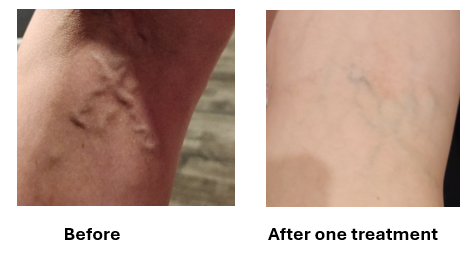
The accompanying photographs show the same general area behind the knee surrounding one acupuncture treatment session.
Before treatment:
The superficial veins were prominently raised above the surrounding tissue.
After treatment:
The veins appeared substantially flatter and less prominent.
More importantly, the patient reported:
no leg pain
substantially reduced puffiness
markedly reduced vein protrusion
improved walking and leg comfort
a calm and relaxed feeling following treatment
The improvement remained noticeable for approximately 10 days.
A small amount of swelling later began to return, particularly when the patient was exposed to a hot environment. However, the veins remained considerably less protruding than before treatment and were still not aching.
Did Acupuncture Make the Varicose Veins Disappear?
No. That would go beyond what this case demonstrates.
Varicose veins can involve structural abnormalities, including problems with the valves that normally help blood move in the proper direction through the veins. Their visible prominence can also vary depending on standing, activity, temperature, venous pressure and surrounding swelling.
The photographs therefore should not be interpreted as evidence that acupuncture repaired a damaged venous valve or permanently closed the abnormal vein.
A more appropriate interpretation is that treatment was followed by a temporary change in some of the factors influencing superficial vein prominence, puffiness, tissue tension and discomfort.
The fact that some swelling returned with heat also suggests that the vein was still capable of changing in size rather than having permanently disappeared.
A Traditional Medicine Perspective
From a Traditional Chinese Medicine perspective, this patient's presentation was assessed primarily as Blood stasis affecting the channels and network vessels of the leg, together with an underlying constitutional deficiency.
However, the treatment strategy was deliberately conservative.
The patient had previously experienced spontaneous bleeding and also reported a tendency toward easy bruising and nosebleeds, as well as a previous history of heavy menstrual bleeding.
For this reason, the goal was not to aggressively "move Blood."
Treatment principles included:
regulating Qi and Blood
gently addressing Blood stasis
supporting the patient's broader constitutional pattern
improving the channel relationships affecting the leg
reducing puffiness and discomfort
avoiding aggressive stimulation of the fragile superficial veins
We Did Not Needle the Varicose Veins
This is an important part of the case.
Acupuncture needles were not inserted directly into the enlarged visible veins.
Because the patient had previously experienced spontaneous bleeding from the area, treatment was performed cautiously.
The individualized approach included traditional acupuncture together with techniques drawn from other special acupucntures.
A local acupuncture point behind the knee that might normally have been considered was intentionally avoided because of its proximity to the enlarged veins and previous bleeding site.
Strong local treatments directly over the veins were also avoided.
The objective was to treat the patient's overall pattern rather than mechanically stimulate the abnormal vein.
Treating More Than What We Could See
Traditional Medicine treatment rarely focuses only on the location where a symptom appears.
This patient's broader health pattern, digestive tendencies, temperature preferences, tongue and pulse findings and general constitution were considered when developing the treatment strategy.
Longer-term treatment therefore focused on supporting her overall condition while gently maintaining healthy Qi and Blood movement.
This is why individualized acupuncture for a condition such as this may look very different from simply putting needles around the visible veins.
Lifestyle Management Was Also Important
The patient began routinely elevating her legs and found this helpful.
She was also encouraged to avoid prolonged stationary standing and excessive local heat. Heat was particularly relevant because she repeatedly noticed that the veins became puffier and more distended in hot environments.
Comfortable regular movement, leg elevation and protection of the superficial veins were therefore used alongside her acupuncture treatment.
What Does the Research Say About Acupuncture and Varicose Veins?
Published research examining acupuncture-related approaches for varicose veins does exist, including small clinical trials and observational studies.
However, the evidence remains limited and includes treatment approaches that may be quite different from the conservative distal acupuncture used in this case.
For that reason, acupuncture should not currently be presented as a proven replacement for established vascular diagnosis or treatment.
The value of this case is narrower but still clinically interesting: one patient experienced a substantial visible change together with resolution of her leg pain, reduced puffiness and improved function following treatment.
When Varicose Veins Need Medical Evaluation
Acupuncture should not replace appropriate vascular care.
Medical or vascular assessment is especially important when varicose veins are associated with:
spontaneous bleeding
significant or increasing swelling
persistent pain
skin colour or texture changes
ulceration
hard, painful or inflamed veins
other concerning vascular symptoms
Because this patient had previously experienced spontaneous bleeding, continued medical and vascular follow-up remained important despite her improvement.
A vascular assessment can determine whether venous reflux or valve dysfunction is present and whether treatments specifically directed at the abnormal vein should be considered.
At JD AcuCare, acupuncture in a case such as this is considered supportive conservative care rather than a substitute for necessary vascular evaluation.
The Clinical Takeaway
The most important outcome in this case was not simply that the vein looked different.
After one individualized acupuncture treatment, this patient experienced:
✓ visibly reduced vein prominence
✓ resolution of her leg pain
✓ reduced puffiness
✓ improved walking and leg comfort
✓ approximately 10 days of sustained improvement
Treatment was performed without directly needling the enlarged superficial veins.
Instead, the approach focused on gently addressing the patient's TCM pattern while taking special precautions because of her previous bleeding history.
The before-and-after change is encouraging, but it represents one patient's experience and should not be interpreted as evidence that acupuncture permanently removes or cures varicose veins.
Individual responses can vary, and varicose veins associated with bleeding, significant swelling, skin changes or other concerning symptoms should receive appropriate medical evaluation.
References
NHS. Varicose veins. The NHS notes that varicose veins can cause aching, heaviness and swelling, that symptoms may worsen after prolonged standing, and that bleeding varicose veins require medical attention.
NICE. Varicose veins: diagnosis and management (CG168). NICE recommends vascular assessment for symptomatic or complicated varicose veins and specifically identifies bleeding as requiring urgent referral.
Society for Vascular Surgery/American Venous Forum/American Vein and Lymphatic Society. Clinical practice guidelines describe duplex ultrasound assessment for venous reflux and established vascular treatment approaches including endovenous therapies and sclerotherapy.
Published acupuncture literature includes small clinical trials and observational studies, but these do not establish the conservative acupuncture approach used in this individual case as a replacement for standard vascular management.