
Taking care of your skin is more than just a surface-level task—it’s about nourishing your body from the inside out.
Acupuncture and herbal medicine are holistic approaches that may help support skin health and complexion. In a place like Calgary, where the dry and windy climate can take a toll on your skin, regular maintenance becomes even more essential.
And then there is Calgary winter to deal with…

The trifactor for damaged skin - cold, windy, dry
How Acupuncture Supports Skin Health
Acupuncture may help support circulation to the skin, which may help with inflammation, elasticity, and a healthy glow. By targeting specific acupuncture points related to skin health, this practice may help:
Boost blood flow and oxygenation: Regular acupuncture treatments may help support circulation to the skin and overall radiance.
Reduce inflammation: Many skin issues, like acne, eczema, and rosacea, are driven by inflammation. Acupuncture may help with inflammatory processes in the body, which may support calmer skin.
Improve skin tone and elasticity: Research on the long-term cosmetic benefits of facial acupuncture remains limited, but acupuncture may help support skin firmness and the appearance of fine lines.
Herbal Medicine for Skin Rejuvenation
TCM herbal medicine complements acupuncture by providing internal support for skin health. The right combination of herbs is traditionally used to balance the body’s systems and nourish from within. Herbal formulas can be personalized to address specific skin concerns, such as dryness, redness, acne, or premature aging.
Some common TCM herbs used to promote skin health include:
Key Individual Herbs for Skin Rejuvenation

Goji berry - good as a snack or tea and great for your skin
He Shou Wu (何首乌 / Fleeceflower Root / 하수오)
Function: Nourishes the Liver and Kidneys, tonifies the blood.
Use for Skin: Traditionally used to support skin tone, hair, and nails.
Goji Berries (枸杞子 / Gǒu Qǐ Zǐ / 구기자)
Function: Nourishes Liver and Kidney Yin, enriches the blood, and promotes skin hydration.
Use for Skin: Traditionally used to support complexion and skin hydration.
Bai Zhu (白术 / Atractylodes Rhizome / 백출)
Function: Strengthens the Spleen, drains dampness.
Use for Skin: Traditionally used for digestion and for puffiness and acne that TCM attributes to dampness.
Dang Gui (当归 / Angelica Sinensis / 당귀)
Function: Nourishes the blood, promotes circulation, and moistens the intestines.
Use for Skin: Traditionally used to support skin elasticity and complexion.
Huang Qi (黄芪 / Astragalus Root / 황기)
Function: Tonifies Qi, raises Yang, and strengthens the Wei Qi (defensive Qi).
Use for Skin: Traditionally used for what TCM describes as strengthening the skin’s defensive Qi and supporting skin vitality.
Zhen Zhu (珍珠 / Pearl Powder / 진주)
Function: Calms the Shen, clears heat, and brightens the complexion.
Use for Skin: Traditionally used to support smooth skin and an even complexion.
Ling Zhi (灵芝 / Líng Zhī / 영지 / Reishi Mushroom)
Function: Traditionally used to tonify Qi and Blood, calm the Shen, and clear what TCM calls heat.
Use for Skin: Traditionally used to support skin hydration, elasticity, and a clearer complexion.
Bai Mu Er (白木耳 / Bái Mù Ěr / 백목이 / White Wood Ear Mushroom)
Function: Nourishes Yin, supports digestion, enhances hydration, and promotes blood circulation.
Use for Skin: Traditionally used to support skin hydration and soothe dry, irritated skin.
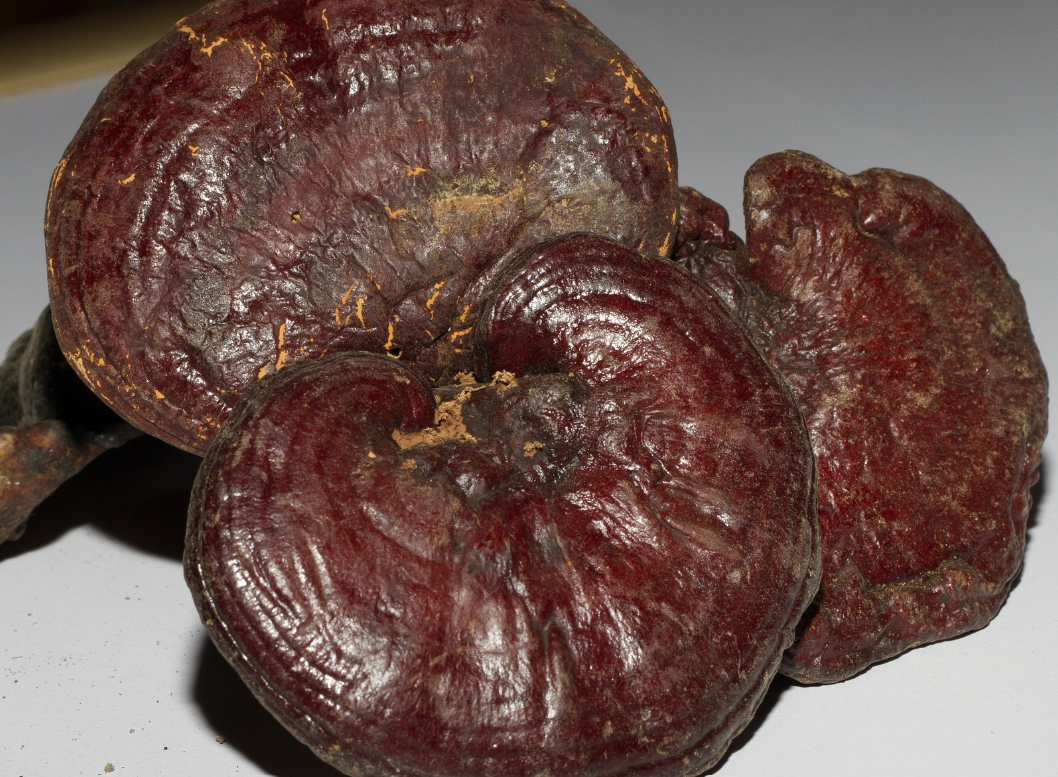
Ling Zhi (Reishi Mushroom)
Regular Maintenance is Key in Calgary's Dry, Windy Climate
Living in Calgary means facing dry and windy conditions that can sap moisture from your skin, leaving it dull, flaky, and prone to irritation. Regular acupuncture sessions, combined with herbal treatments, may help support skin hydration and what TCM describes as internal balance.
Consistent care becomes vital for several reasons:
Combatting Dryness: The dry air in Calgary can strip your skin of natural oils, leading to cracking and irritation. In TCM terms, acupuncture and herbal medicine are traditionally used to support the body's fluids, which may help with skin dryness.
Reducing Sensitivity: Harsh weather conditions can make the skin more reactive, increasing redness and irritation. Acupuncture’s calming effects may help soothe sensitive skin, and herbs are traditionally used to support internal balance.
Supporting Skin Through the Seasons: Wind and dryness can contribute to wrinkles. Regular treatments may help support circulation and skin resilience. Research on the long-term cosmetic benefits of facial acupuncture remains limited.
Also see our blog on K-Beauty

JD AcuCare - a holistic program for your skin, focusing on both the face and body
Internal Organ Health and the Skin Connection
In TCM, skin health is not just about external factors; it’s deeply tied to the functioning of your internal organs.
1. Lung (肺 / Fèi / 폐)
Connection to Skin: The lungs are said to govern the skin and body hair. When the Lung Qi is strong, the skin is moist and healthy, but if it is weak, dryness, eczema, and other skin issues may arise.
Skin Signs: Dryness, rough texture, eczema, psoriasis, pallor, sensitivity to the external environment.
TCM Focus: Nourish and strengthen the Lung Qi and ensure proper moisture in the body.
2. Liver (肝 / Gān / 간)
Connection to Skin: The liver stores the blood and regulates its smooth flow throughout the body. Proper circulation of Liver Qi and blood ensures skin vitality and prevents stagnation that could lead to conditions like acne or rashes.
Skin Signs: Acne, rashes, itchiness, red or inflamed skin, hives, eczema.
TCM Focus: Smooth the Liver Qi and move Liver Blood.
3. Spleen (脾 / Pí / 비)
Connection to Skin: The spleen is responsible for transforming and transporting food into Qi and Blood. Weak Spleen Qi can lead to dampness, which manifests as oily skin, puffiness, or acne.
Skin Signs: Oily skin, acne, puffiness, cellulite, sagging skin, and dark circles under the eyes.
TCM Focus: Strengthen the Spleen, eliminate dampness, and improve digestion.
4. Kidney (肾 / Shèn / 신)
Connection to Skin: The kidneys store Jing (essence), which is considered the foundation of the body’s vitality. When Kidney Jing is depleted, the skin ages prematurely, becoming dry and wrinkled.
Skin Signs: Premature aging, wrinkles, dark circles, dry skin, loss of elasticity.
TCM Focus: Nourish Kidney Yin and Yang and replenish Jing, as traditionally described in TCM.
5. Heart (心 / Xīn / 심)
Connection to Skin: The heart governs the blood and the Shen (mind/spirit). When the Heart Qi and Blood are sufficient, the complexion is vibrant. Emotional stress or poor circulation can lead to dull, uneven skin tone.
Skin Signs: Dull complexion, paleness, redness of the face, rosacea, emotional stress affecting skin health (e.g., stress-related acne).
TCM Focus: Calm the Shen, invigorate Heart Blood circulation, and improve the complexion.
6. Pericardium (心包 / Xīnbāo / 심포)
Connection to Skin: The pericardium protects the heart and is associated with emotional well-being. Emotional distress can cause skin conditions like rashes and eczema.
Skin Signs: Stress-induced skin issues such as eczema, hives, and rashes.
TCM Focus: Calm and protect the Heart, relieve emotional stress.
7. Small Intestine (小肠 / Xiǎocháng / 소장)
Connection to Skin: The small intestine separates the clear from the turbid. If this process is impaired, it can result in heat or damp-heat manifesting in the skin.
Skin Signs: Red, inflamed acne, heat rashes, and blemishes.
TCM Focus: Clear heat and damp-heat from the Small Intestine, support healthy digestion.
8. Gallbladder (胆 / Dǎn / 담)
Connection to Skin: The gallbladder is responsible for decision-making and courage, and it also plays a role in the smooth flow of Liver Qi. Gallbladder stagnation can result in issues like acne and oily skin.
Skin Signs: Acne, greasy skin, excess oil production, and yellowish complexion.
TCM Focus: Regulate Gallbladder Qi, clear damp-heat.
9. Stomach (胃 / Wèi / 위)
Connection to Skin: The stomach is responsible for digesting food and fluids, transforming them into Qi and Blood. Stomach heat or dampness can lead to skin problems such as acne and inflammation.
Skin Signs: Inflammation, acne (especially around the mouth and chin), oily skin, and rashes.
TCM Focus: Clear Stomach heat, harmonize digestion, and eliminate dampness.
10. Large Intestine (大肠 / Dàcháng / 대장)
Connection to Skin: The large intestine is responsible for eliminating waste. Constipation or poor bowel function can lead to skin congestion and breakouts.
Skin Signs: Blemishes, acne, dull and sallow complexion, clogged pores.
TCM Focus: Promote healthy elimination and clear what TCM describes as heat in the Large Intestine.
11. Urinary Bladder (膀胱 / Pángguāng / 방광)
Connection to Skin: The urinary bladder controls water metabolism and the excretion of fluids. When there is fluid retention or stagnation, it can manifest as puffiness and edema in the skin.
Skin Signs: Puffiness, edema, and water retention.
TCM Focus: Promote fluid circulation and eliminate dampness.
12. San Jiao (三焦 / Sānjiāo / 삼초)
Connection to Skin: The San Jiao (Triple Burner) regulates the flow of Qi and fluids in the body. Disharmony in the San Jiao can lead to skin issues related to fluid imbalance, such as dry or greasy skin.
Skin Signs: Imbalance between dry and oily skin, uneven texture.
TCM Focus: Harmonize the flow of Qi and fluids across all three burners.
Maintaining skin health requires a multifaceted approach for most Calgarians. Regular acupuncture sessions, combined with personalized herbal medicine, may help support skin health and overall wellness.
If you're ready to embark on a journey toward healthier skin through acupuncture and TCM, book a consultation today to learn how these ancient practices can work for you.